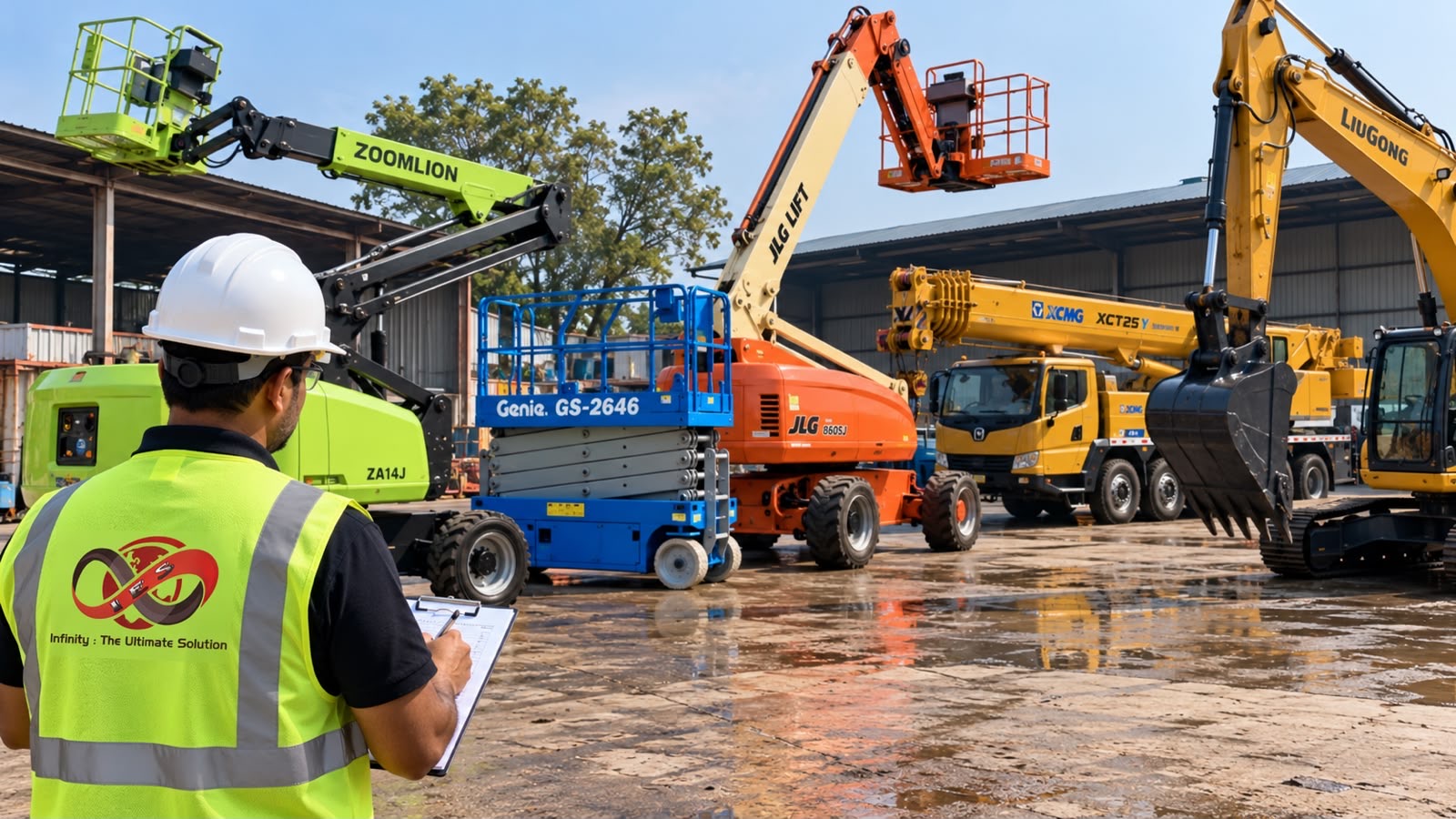
Buying a Used Boom Lift, Scissor Lift or Crane? Complete Inspection Checklist
Published on 2026-10-23
Investing in used heavy equipment like Boom Lifts, Scissor Lifts, Aerial Work Platforms (AWPs), or Cranes is a smart, cost-effective decision for construction companies, contractors, and fleet managers. However, without a thorough technical evaluation, a seemingly great deal can quickly turn into a maintenance nightmare.
At Infinity Equipments And Spares, we supply high-quality equipment and spare parts to clients across India. Based on our industry experience, we have compiled the ultimate inspection checklist to help you evaluate second-hand machinery effectively before making a purchase.
Phase 1: Documentation and Historical Records
Before physically inspecting the machine, always verify its paperwork:
- Machine Identification: Cross-check the machine identification plate (data plate). Ensure the serial number matches the ownership documents.
- Service History: Ask for maintenance records, previous repair logs, and OEM service logs. Ensure Safety Maintenance procedures were followed throughout the machine's life.
- Operating Hours: High operating hours aren't inherently bad if the machine has been strictly maintained, but it will give you an idea of the machine's remaining lifecycle and upcoming overhaul costs.
Phase 2: Structural and Mechanical Integrity
A machine's structure takes the most physical stress. Inspect the entire chassis and boom framework for:
- Cracks and Welds: Look closely at high-stress areas for structural cracks or unauthorized, non-OEM weld repairs.
- Corrosion: Deep rust on load-bearing structures is a major red flag.
- Drive Systems & Engine: Check the condition of the tyres, wheels, brakes, and steering mechanisms. For diesel or hybrid lifts, meticulously inspect the Engine Parts along with the Starters & Alternators to ensure there is no abnormal noise or starting issue.
Phase 3: Hydraulic System Evaluation
Hydraulic systems are the muscle of any heavy equipment.
- Pumps, Valves and Actuators: Inspect for any physical damage or sluggish response. If you need replacements in the future, reliable Hydraulic Parts, responsive Solenoid Coils, and leak-free Actuators are crucial for maintaining lifting capacity.
- Hoses and Leakage: Check all hydraulic hoses for cracking, bulging, or fluid leaks.
- Filtration: Inspect the condition of the hydraulic oil and Filters. Contaminated oil is a primary cause of major hydraulic failures.
Phase 4: Electrical and Control Systems
Modern AWPs and cranes rely heavily on complex electrical architectures.
- Control Panels: Test both the ground and platform controls. Ensure the Joysticks and panel Switches operate smoothly without sticking or dead zones.
- Wiring and Batteries: Check for exposed wires, corrosion on battery terminals, and the overall health of the Harnesses and heavy-duty Connectors.
- Safety Interlocks: Test emergency stops, tilt alarms, and emergency lowering systems. Faulty Sensors, burnt Relays, or malfunctioning Electronic Modules must be replaced immediately, as bypassing safety devices is strictly against regulations.
Phase 5: Equipment-Specific Checks
- Boom Lifts & Scissor Lifts: Inspect the scissor stack or boom extension for smooth operation, unusual grinding noises, and proper lubrication. Check the platform flooring and safety rails for damage. For articulated booms, verify the accuracy of Angle Sensors and Boom Length Sensors.
- Cranes: Pay special attention to wire ropes, hooks, the telescopic boom, outriggers, and the Load Moment Indicator (LMI). Ensure load charts are legible, and crucial safety components like Load Pin Sensors are perfectly calibrated.
Phase 6: Understanding Spare Parts
When calculating the total cost of ownership for a used machine, factor in the cost of future spare parts. We offer three main categories to suit different budgets:
- Genuine Parts: Guaranteed compatibility and seamless operation, supplied directly by original manufacturers.
- OEM Parts: Identical quality to genuine parts but highly cost-effective, sourced directly from the original component manufacturers.
- Aftermarket Parts: High-quality, budget-friendly replacements ideal for older, out-of-warranty machines and routine consumables.
Frequently Asked Questions (FAQs)
Q: Should I test the load capacity of a used crane or lift myself?
A: No. Unsafe DIY load tests can be incredibly dangerous. Always hire a qualified technician to perform appropriate functional testing and load verification as per Indian regulations.
Q: What is the most common point of failure in used AWPs?
A: Hydraulic leaks and worn-out control Joysticks are the most common, yet easily fixable, issues found during inspections.
Need the Right Spare Parts for Your Fleet?
Buying used equipment doesn't have to be a gamble. By partnering with a trusted supplier, you can ensure your machinery operates safely and profitably. At Infinity Equipments And Spares, we supply verified Genuine, OEM, and Aftermarket parts for all major brands across India.
Contact Us for a Parts QuoteHelpful?
Join the Discussion
Recent Comments (0)
No comments yet. Be the first to share your thoughts.